In defence of thanksgiving day labour
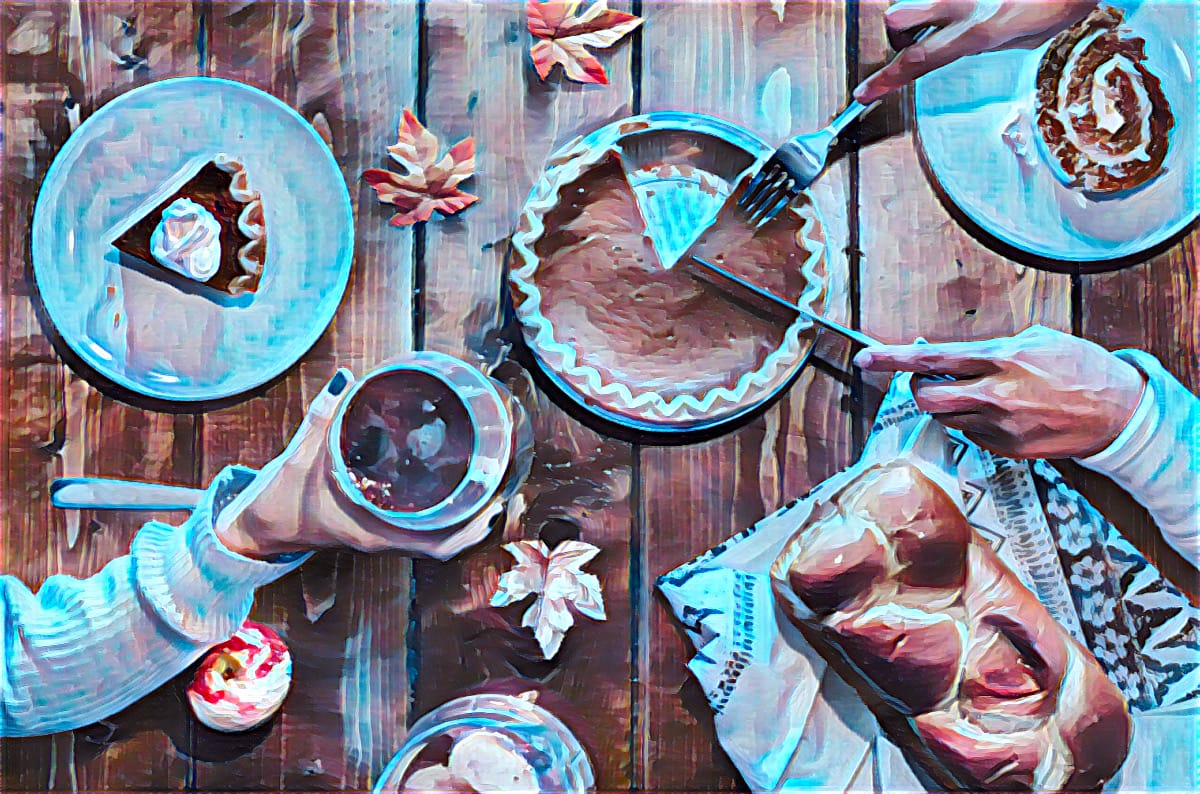
It was Thanksgiving Day this past Monday in Canada, and I decided my son was ready to learn how to make pumpkin pie from scratch. No pre-bought pie shells, filling, or shortcuts; just lard, flour, pumpkin, and spices from my wife’s very well-organized spice cabinet.
“Baking is a lot of work,” my son said flatly as we pushed the three raw pies towards the middle of the oven.
“It is,” I replied, “But it’s good for us to make something with our hands once in a while – it’s about going through the process, right?” And it is a process. There are more difficult pie recipes, but making a pumpkin pie from scratch requires concentration, time, and a certain interest in tradition.
It’s a lot of work, but I take pleasure in slowing down and meticulously following directions to produce a product that everyone gets to enjoy at the end of the night. Typically, it’s my contribution to Thanksgiving dinner, which requires everyone in the family to pitch in to make happen, and my son is starting to learn that.
There are, of course, easier ways to put dessert (and the dinner itself) on the table. Many restaurants in Victoria offer Thanksgiving Day feasts on demand, and there are services that deliver them to your door for a small fee. The growing number of restaurants offering these services each year suggests demand for takeout turkey and dessert is increasing.
Not in our household, though; Thanksgiving dinner is still serious business. I say this lightly, without a hint of superiority. I like the labour that goes into preparing Thanksgiving dinner. This shouldn’t surprise anyone who knows me. It’s the same reason I fly fish instead of casting spoons — I get something out of the challenge. It’s not that my family doesn’t use Uber Eats, Instacart, or similar apps to make our lives easier; it’s just that I think there’s much to be gained from everyone in the family coming together to make a big, complicated meal.
As I sat back with a pint of beer on Monday after dinner and dessert were over, I started to think about how much work the meal required this year and how quickly it was all over. Dining with a five-year-old changes the dynamic of family dinners, making them slightly less leisurely. And the question “is the juice worth the squeeze?” crossed my mind several times while Tosh and I were rolling out sheets of pastry. Moreover, I wondered if I was being a tad old-fashioned about Tosh and me going through the whole pie-making process, despite the fact that he seemed to really enjoy it — maybe we should be outsourcing Thanksgiving dinner and dessert to the pros, too.
But then I came to my senses. Food and family are intimately connected, and slowing down a few days out of every year to make a big dinner is more than worthwhile, says this Thanksgiving traditionalist. When we take time to prepare food together, in our labour, there is space and opportunity for connection with each other. Preparing food, especially more complex meals, requires us to work together to interpret instructions, problem-solve, and generally cooperate as a family. Cooking and baking also reveal each person’s unique approach to preparing food, turning the kitchen into a creative space. This is especially true for children, who often come up with some pretty unorthodox culinary ideas.
But, there is a strong rationale for outsourcing Thanksgiving dinner labour as well. More time for relaxation, engaging with family members, and reducing stress in the kitchen are all compelling benefits. Instead of spending hours standing over a hot stovetop or kneading dough until your hands ache, outsourcing dinner lets you break out a board game and a bottle of wine and have the kind of unhurried, light conversation holidays are meant for. What’s more, many people have worked hard to afford the luxury of not having to cook or bake, and there is absolutely nothing wrong with wanting to do, well, nothing. However, in taking a shortcut and skipping the work, I think we lose something meaningful.
Indeed, in doing the work that Thanksgiving dinner requires, or any large-scale dinner for that matter, you’re implicitly making the affirmation that the work is just as important as the result — the experience of Thanksgiving lies both in the enjoyment of the good and in the labour. The chopping, stirring, and kneading are as essential to the celebration as the meal itself. Preparing a turkey and its supporting side dishes is messy, difficult, and can result in silly arguments, like whether sausage belongs in stuffing or if using lard is gross and outdated. But in this space is an opportunity to bond and develop family culture; friction, with the right mindset, can give rise to some pretty funny situations that we may end up referring to many years later. I remember one year my mom cooked a fifty-pound turkey that her brother raised on his farm. The bird was so big that the oven door would not close entirely. My dad had to stay up all night and monitor the cooking process, and wasn’t in the happiest of moods the next day. But it was a good story.
Some may dismiss my view that deriving meaning from hard work is old-fashioned or a relic of the Protestant work ethic, but I think it can really bring families together. This work doesn’t have to be cooking-related, though; for example, my wife’s family has a family culture centered around fishing. The process of searching for, catching, and cleaning fish has been described at many family events over the years as the glue that holds the family together. My son’s great-grandfather used to say, “A family that fishes together stays together.” This man, who shares a name with my son, understood that an activity, or a process, creates the right circumstances for people to express themselves and connect with each other. These acts of sharing and expression may be big or small, but the important thing is that the opportunity is created through some kind of process working toward a goal. Often, that process requires some kind of work or cooperation, be it baking, fishing, or some other activity entirely.
When we make a meal together, we also honour the past. Many families, including ours, have dishes created and prepared every year by a grandparent or ancestor, and serving these dishes pays homage to the memory of that person and to what they contributed to the family. It doesn’t matter whether their recipe came from the back of a bag of flour, a cookbook, or a church bulletin in Belfast; what matters is that these traditions are kept alive to communicate the intricacies of the past to the present generation. As we walk through our family members’ recipes, stories, and memories, they come to life, and for a brief moment, they’re alive again. “Your great-grandmother, Kay, always told me it’s important for a dish to look colourful,” I said to Tosh this year. “And she’s the one who told me to use real lard in my pastry.” Old stories, remarks, and memories of departed family members organically arise during the preparation of traditional dishes, and in a way, our past is infused into the food we prepare, providing us with a sense of family history.
Practically speaking, preparing our own Thanksgiving dinner also enables better quality control. Sure, if we order dinner and dessert in, it might taste acceptable to our taste buds, but these meals are prepared with economics in mind. Restaurants cut corners, use inferior products, and add fillers to food, dulling the quality and intensity of the meal. You cannot convince me that a restaurant, even an expensive and exclusive one, will concoct a turkey dinner that outshines a carefully prepared, home-cooked meal. Generally, when you’re investing time into preparing a big meal, you hold yourself to a higher standard, and that intention shows up on the plate.
I understand that not everyone has the time to dedicate to the kind of food preparation I am championing in this essay. However, I will stand by my claim that when we commit to the process, dedicate the hours, and put in the effort to create something original in our own kitchens, the resulting output will taste substantially better than any mass-produced dinner from the chain restaurant down the street. More importantly, preparing Thanksgiving dinners brings families together and creates opportunities for connection and meaning. Ironically, my son did not enjoy the pumpkin pie this year (well, he ate all of the pastry, so a half-win). However, last night, after the third night of trying to get him to try it, he finally choked down a few bites. “How was it?” I asked. He held out his arm, fist clenched, and slowly turned his thumb to the side (yes, like an ancient Roman watching a gladiator fight), indicating neither good nor bad. I can live with that result.